I first heard about the existence of the celesta during my piano studies in San Sebastián, Spain, in 2004, playing the original version of Debussy’s Les chansons de Bilitis: a dancer, two harps, two flutes, celesta, and a pseudotranslation of Ancient Greek poems. So enchanting!
Normally playing celesta is just an incidental experience for an aspiring pianist, too busy unraveling the difficulties of endless piano repertoire. As a matter of fact, many professional pianists have not even as much as played one key of a celesta. As I continued my studies, I moved to The Netherlands and dedicated my Masters to orchestral playing. Playing celesta is an important task of the orchestral pianist: in symphonic repertoire the celesta shines.
During my time at the conservatory, I came in contact with Schiedmayer Celesta in Stuttgart, Germany; the only manufacturer of celestas in the world. Elianne Schiedmayer kindly answered all my questions, and there were many as I did not have an instrument at my disposal except during the short periods when I was playing with an orchestra.
Der Rosenkavalier, Lieutenant Kijé, Music for Strings, Percussion and Celesta, Das Lied von der Erde… at the sound of the first notes of the celesta, the atmosphere changes; from mundane to magical, from gloomy to hopeful. It often struck me that despite the hypnotizing sound and technical possibilities of the instrument, there was barely any original repertoire for celesta more than 120 years after its invention, and no solo recitals or recordings whatsoever.
I decided to act: with Schiedmayer’s support I began arranging (mostly) piano music and organizing celesta concerts. I was terrified for my first concert: perhaps no one writes solo pieces for celesta because the audience does not want to hear it? It took just one performance and the sight of the delighted faces in the audience after each piece to realize that there was no celesta music because people did not realize that the celesta even existed!
At first sight, the celesta may look like a piano because of its keyboard, but the qualities of its sound make it a completely different instrument. It has a maximum of 5,5 octaves; that is 66 keys opposed to 88 on a piano. The attentive listener will notice small differences from the original scores in this album, for example in the left hand of the Arabesque and the Rêverie; and in most arrangements, there is a change or jump in octave registers respecting the original to fit the composition into the range of the celesta.
Thick chord textures in the high register that work beautifully in a piano result in a cacophony of ringing harmonics in the celesta. The lower register of the celesta has a shorter sustain than the heavy low strings of a piano. The sound does not build up in the low and middle register as it does on the piano, because of the fast decay of the sound in the struck steel plates, as opposed to vibrating strings in a piano. All of this means that not every (piano) piece is suitable for a celesta version.
The particularities of its sound translate into poor expressive possibilities in, for example, Romantic repertoire, but on the other hand, these particularities create excellent conditions for many compositions including Baroque harpsichord music and plenty of Impressionistic compositions. Thick low chords that may sound fuzzy in the piano deliver delightfully rich chords in the lower register of the celesta. The celesta’s long sustained and penetrating high notes make for very expressive melodies. The low/middle register is very pleasing to the ear, but it is underrepresented in the existing original repertoire. In this album I have made abundant use of these and other compositional resources that work best on the celesta.
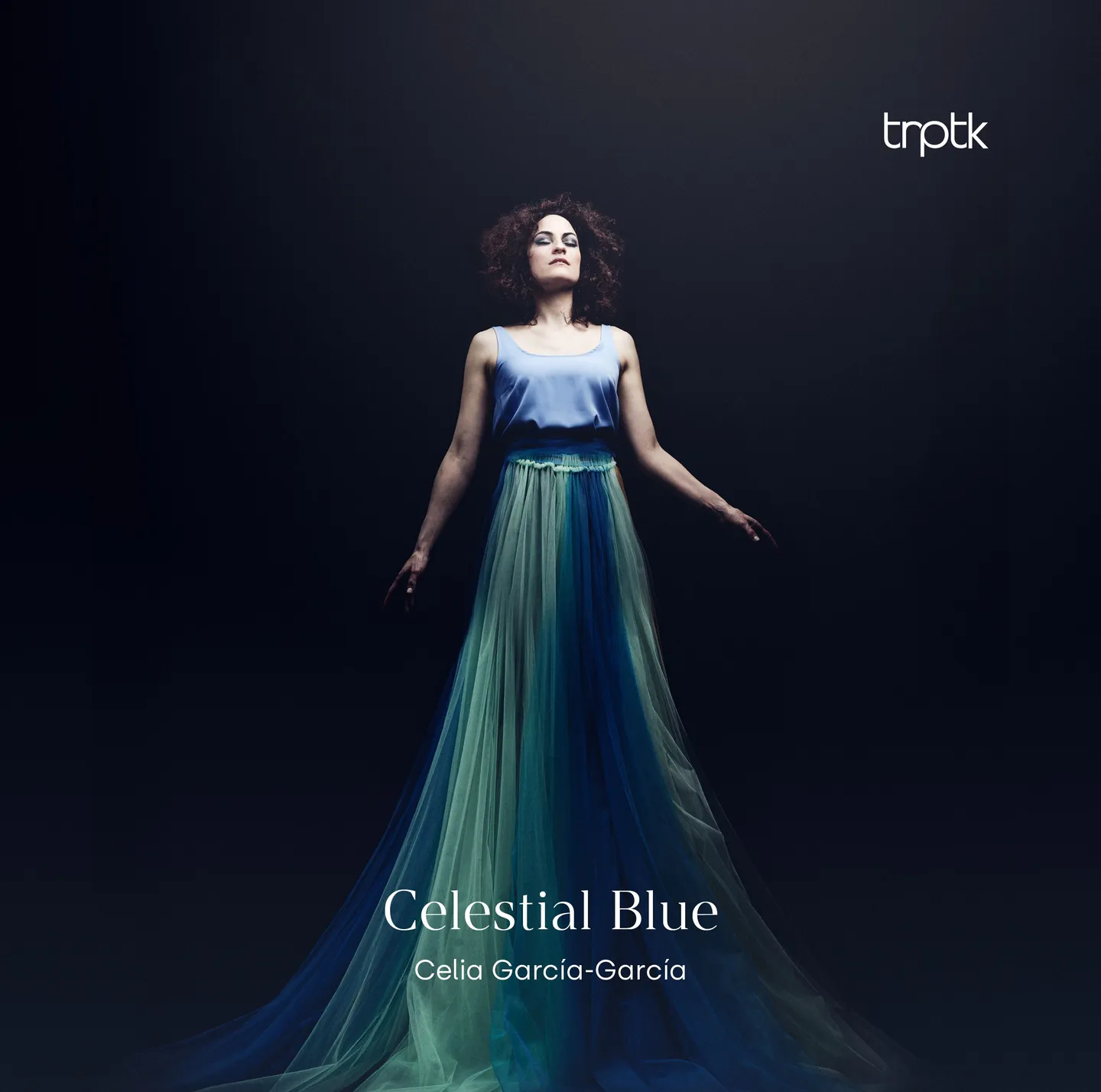
The celesta is dreamy, heavenly, and invokes magical fairytale scenes. This album is a journey that highlights the dream and the magic, but touches upon some darker, deseolated and gloomy contrast along the way, before arriving at a soothing and calming end.
It is celestial. It is blue. Celestial Blue.