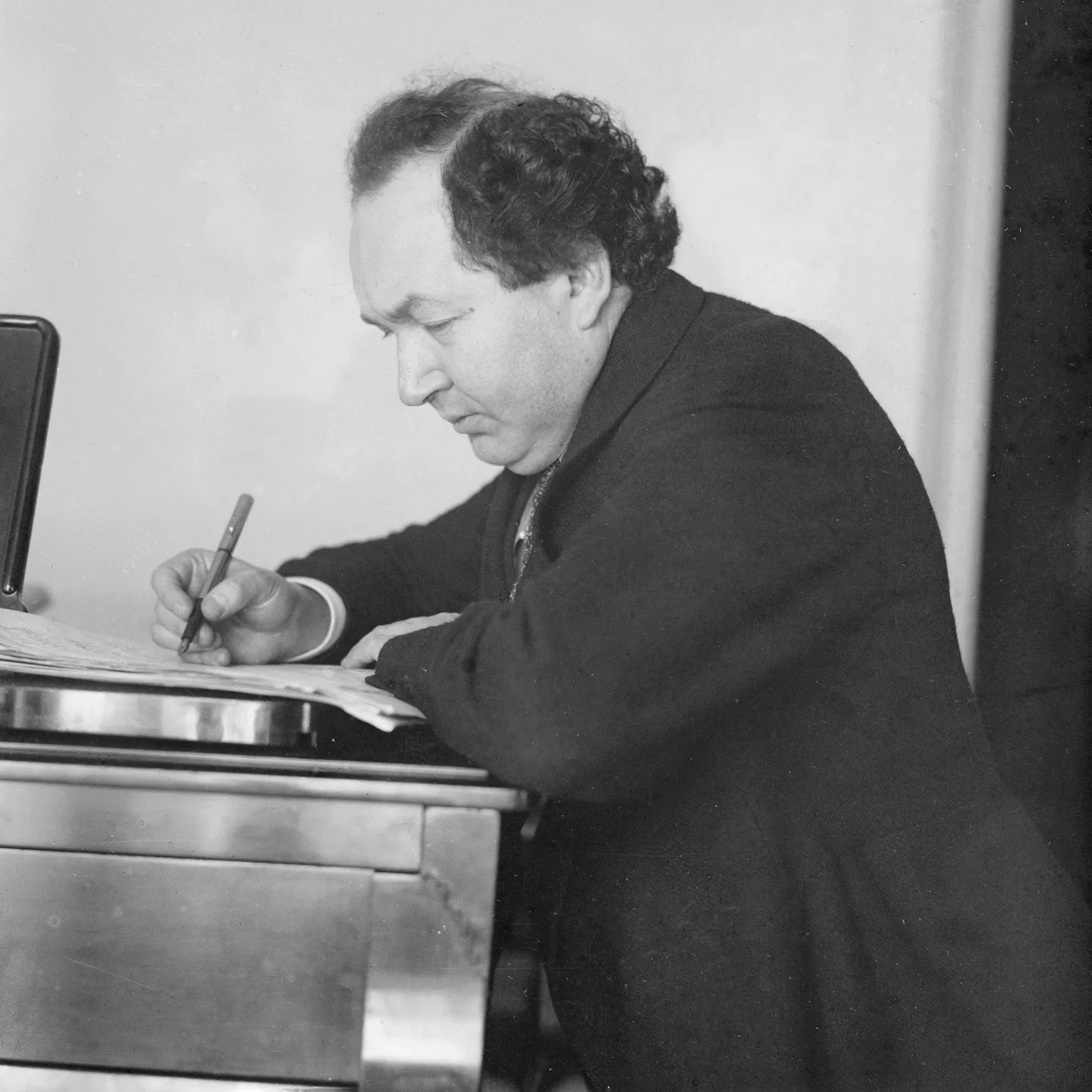
Biography
Leopold Godowsky (1870–1938) was a Lithuanian-American composer, pianist, and pedagogue, widely regarded as one of the most formidable keyboard intellects of his time. A child prodigy largely self-taught, Godowsky began touring and publishing at a young age, eventually settling in the United States where he built an international reputation as both a performer and teacher. Although often described as a virtuoso’s virtuoso, he was less interested in spectacle than in expanding the expressive, technical, and intellectual possibilities of the piano.
Godowsky is best known for his radical reimaginings of existing repertoire, particularly his Studies on Chopin’s Études, which transform already demanding works into extraordinarily complex contrapuntal and polyrhythmic constructions. These studies exemplify his core aesthetic: maximum musical richness achieved with apparent physical economy. His innovations in fingering, voicing, and hand independence influenced generations of pianists and foreshadowed later developments in pianistic technique, even as his own music was often considered too difficult for widespread adoption.
Beyond the piano, Godowsky composed songs, chamber works, and orchestral music, and served as a respected educator at institutions such as the Vienna Academy and the New York Institute of Musical Art. Despite periods of personal tragedy and declining health later in life, his legacy endures as that of a musician’s musician—an artist whose work represents the outer limits of pianistic possibility and a relentless pursuit of refinement, balance, and intellectual depth in music.