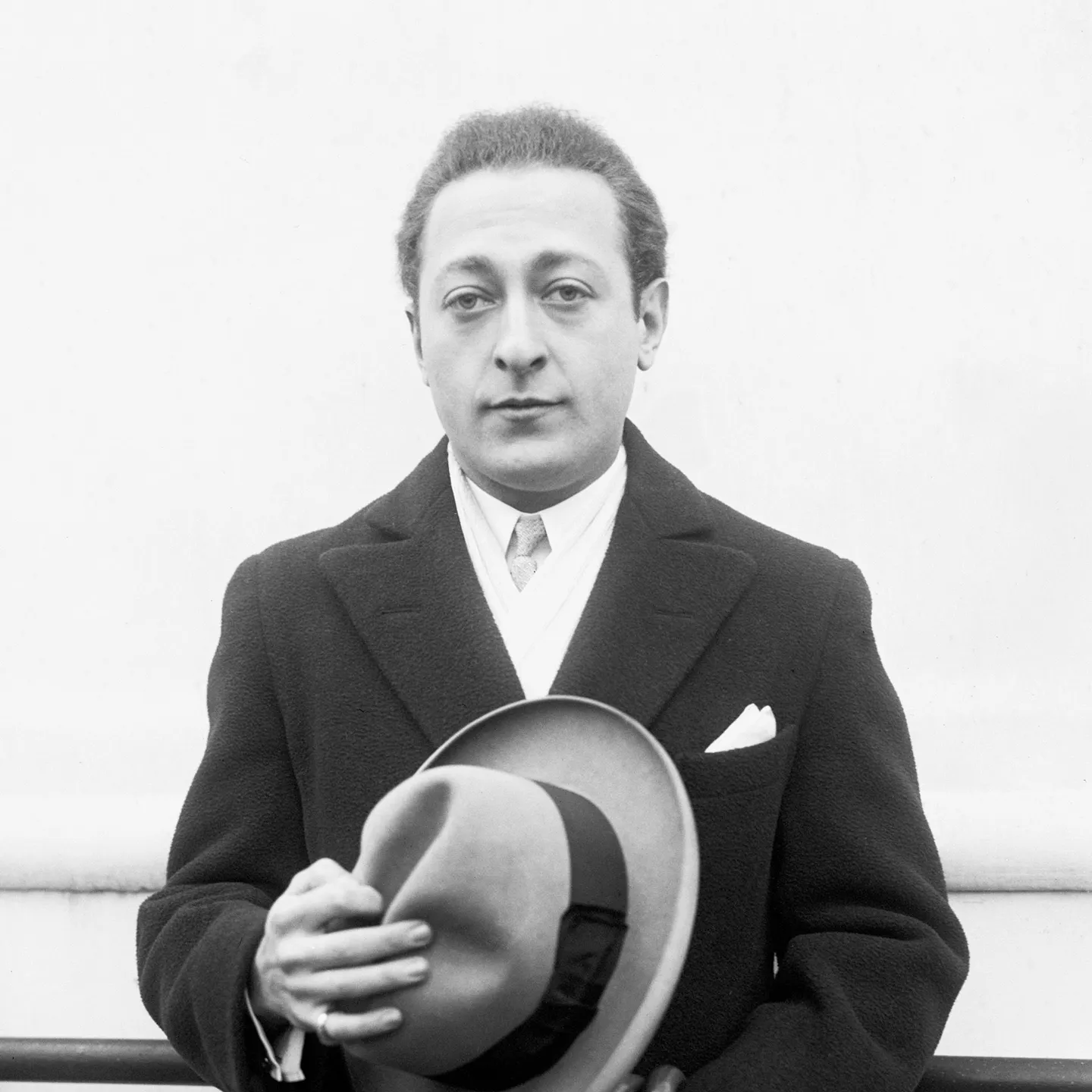
Biography
Jascha Heifetz (1901–1987) is widely regarded as one of the greatest violinists of all time, a musician whose technical brilliance and distinctive sound redefined what audiences believed possible on the instrument. Born in Vilnius (then part of the Russian Empire), he showed prodigious talent from an early age and made his public debut at just seven years old. By his teens, Heifetz was already being hailed as a phenomenon, astonishing listeners with his precision, speed, and seemingly effortless command of the violin.
After emigrating to the United States in 1917, Heifetz made a sensational American debut at Carnegie Hall that cemented his reputation almost overnight. His playing was marked by an immaculate technique, a focused, penetrating tone, and an interpretive intensity that gave even familiar works a striking freshness. Heifetz approached music with a perfectionist’s discipline, often setting tempos slightly faster than tradition, which added to the electrifying clarity and drive of his performances.
Beyond his virtuosity, Heifetz was also a deeply influential interpreter and editor of the violin repertoire. His recordings—many of which are still considered definitive—shaped generations of violinists and listeners alike. He championed lesser-known works, created his own transcriptions, and collaborated with leading conductors and pianists, leaving behind an extraordinary recorded legacy that continues to be studied and admired.
In his later years, Heifetz turned increasingly to teaching, passing on his uncompromising standards and musical insights to a new generation of players. Though famously private and exacting, his impact on violin performance is immeasurable. Today, Jascha Heifetz remains a benchmark of technical excellence and artistic authority, a figure whose influence still echoes in concert halls and studios around the world.