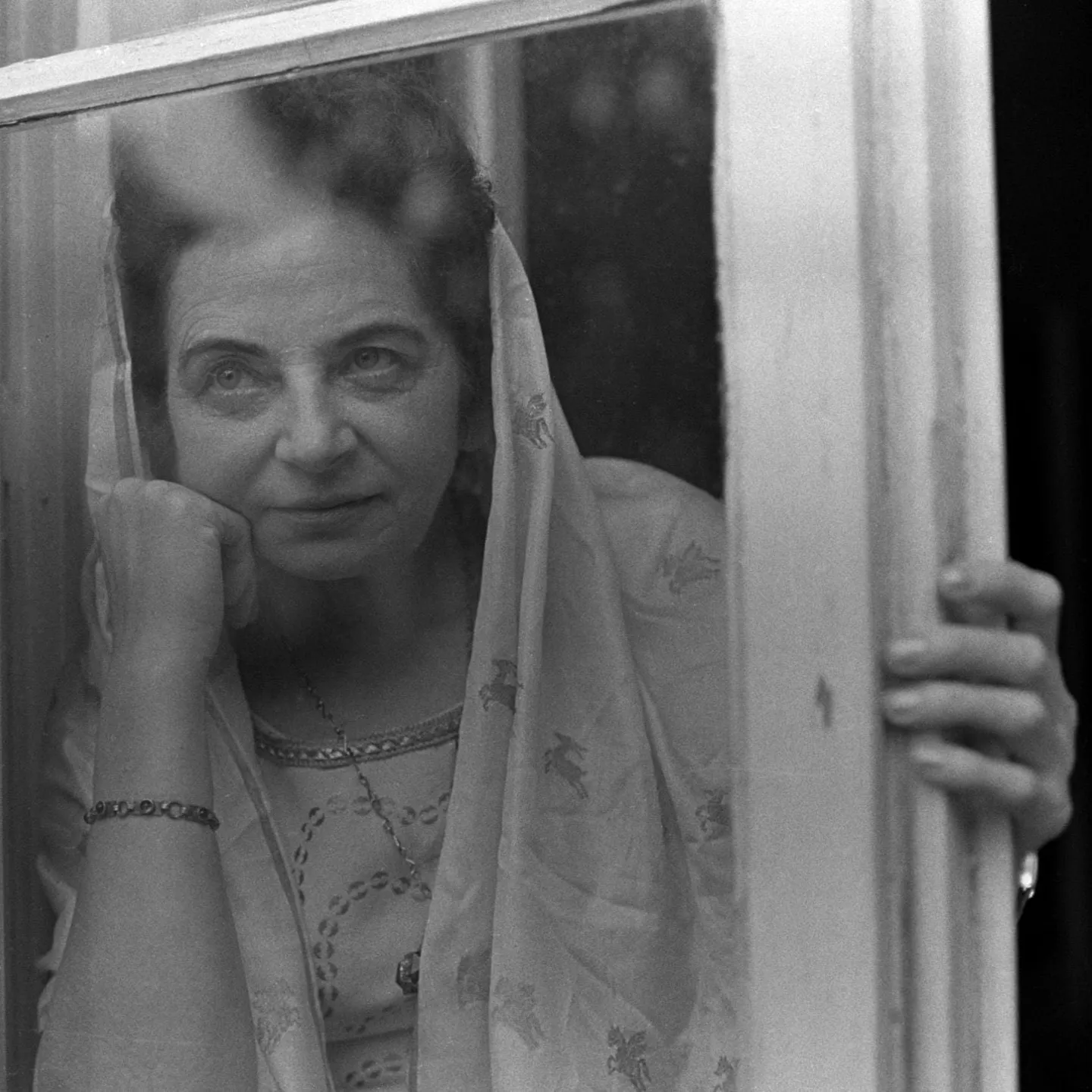
Biography
Grażyna Bacewicz (1909–1969) was one of the most important Polish composers of the 20th century, as well as a virtuoso violinist and an influential teacher. Born in Łódź to a musically active family, she showed exceptional talent early on and went on to study composition and violin at the Warsaw Conservatory. She later refined her skills in Paris, studying composition with Nadia Boulanger and violin with Carl Flesch—an experience that helped shape her confident, modern musical voice.
Bacewicz’s career uniquely balanced performance and composition. During the 1930s and 1940s she was an active concert violinist, serving as concertmaster of the Polish Radio Orchestra and performing widely across Europe. After a serious car accident in 1954 ended her performing career, she devoted herself fully to composing. This turning point marked an especially productive period, during which she produced many of her most significant works.
Her music is often associated with neoclassicism, though it evolved continually throughout her life. Bacewicz had a gift for combining formal clarity, rhythmic vitality, and sharp wit with emotional depth. Particularly admired are her string works—such as her string quartets, violin concertos, and sonatas—which are prized for their technical brilliance and idiomatic writing. In later works, she explored more modernist techniques while maintaining her distinctive sense of structure and drive.
Beyond her achievements as a composer, Bacewicz played a crucial role in shaping postwar Polish musical life. She taught composition, served on juries for international competitions, and was widely respected as a cultural figure. Today, she is recognized not only as a pioneering woman in a male-dominated field, but as a composer of enduring originality whose music continues to gain international attention and appreciation.